RoofMan Official Blog
"If we teach today as we taught yesterday, we rob our children of tomorrow."
The Dajjal and the Laws of Time
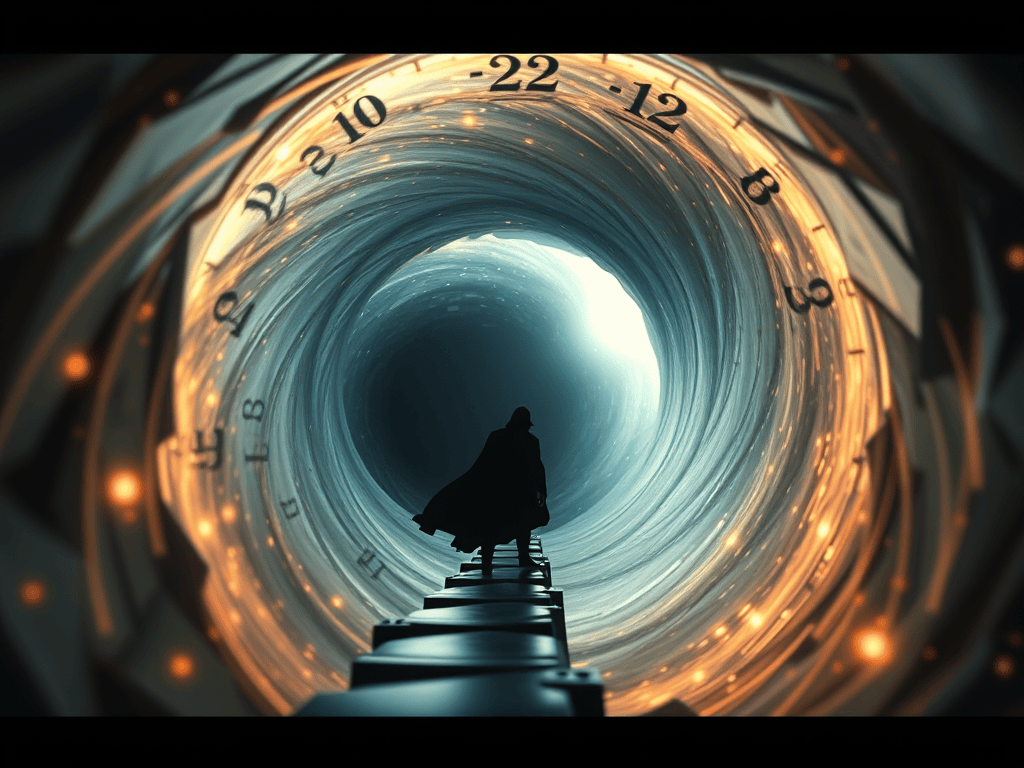
What I am about to say is not a definitive religious interpretation, but rather a personal conceptual reflection that has evolved through my humble studies of religious stories, my fascination with science, and my ongoing search for truth.
And always and forever — God and His Messenger know best.
Modern physics — through the theory of relativity in the macrocosm and quantum mechanics in the microcosm — places us before mysterious frontiers separating what is possible from what is imagined.
Einstein’s equations and the mathematics of quantum entanglement tell us, in their own language, that time is not a rigid arrow moving in one direction, but a dimension that can be stretched, bent, or even folded.
Under extraordinary cosmic conditions — such as black holes, wormholes, or deep curvatures of spacetime — time travel becomes a theoretical possibility rather than mere fantasy.
Among the boldest human speculations is the Alcubierre Warp Drive — a concept proposed by physicist Miguel Alcubierre in 1994. It describes a way to move faster than light not by violating relativity, but by bending spacetime itself: compressing it in front of a vessel and expanding it behind.
In theory, such a “warp bubble” could exceed the speed of light, and perhaps even reverse the direction of time (Light Cone), opening the door to the possibility of traveling into the past.
Yet even in this daring imagination, the principle of causality stands as an unbreakable cosmic law: no being can change or freely interact with the past without collapsing the chain of cause and effect. The universe itself enforces a balance that prevents paradox and chaos.
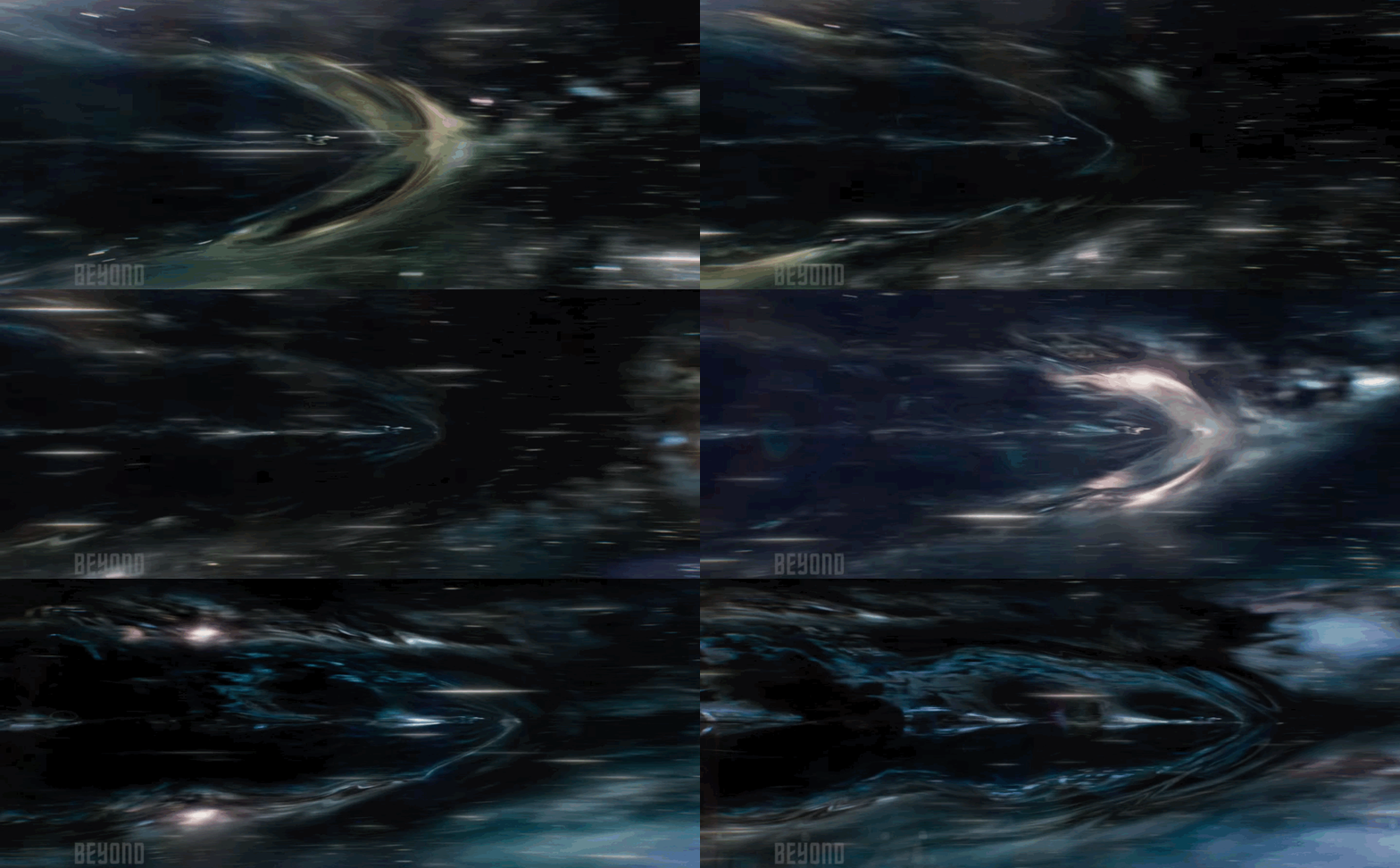
However, sacred texts present another dimension to this question — not one of equations, but of Divine Will.
The story of the Antichrist (Al-Dajjal), as narrated by Tamim al-Dari and reported by Fatimah bint Qays (may Allah be pleased with her), describes a being who exists outside the normal flow of time — imprisoned on an island, aware of both the past and the future, yet awaiting divine permission to emerge.
This narration mirrors the spirit of scientific inquiry: both hint at the possibility of movement through time, yet both affirm the existence of laws that prevent disorder and preserve cosmic harmony.
Einstein’s relativity shows that time slows down as an object approaches the speed of light — meaning that a traveler moving at immense speed could leap into the future while only moments pass for him.
Quantum mechanics, on the other hand, introduces the idea of retrocausality — that the future might influence the present.
Yet the universe is not lawless; it contains what might be called a cosmic firewall that protects the timeline from collapse.
The most famous example is the Grandfather Paradox: if one travels to the past and kills his grandfather before his father’s birth, he would nullify his own existence.
This is not merely a logical dilemma — it is a law of preservation. In theological reflection, it appears as a Divine Law of Balance, preventing creation from undoing itself by tampering with its own cause.
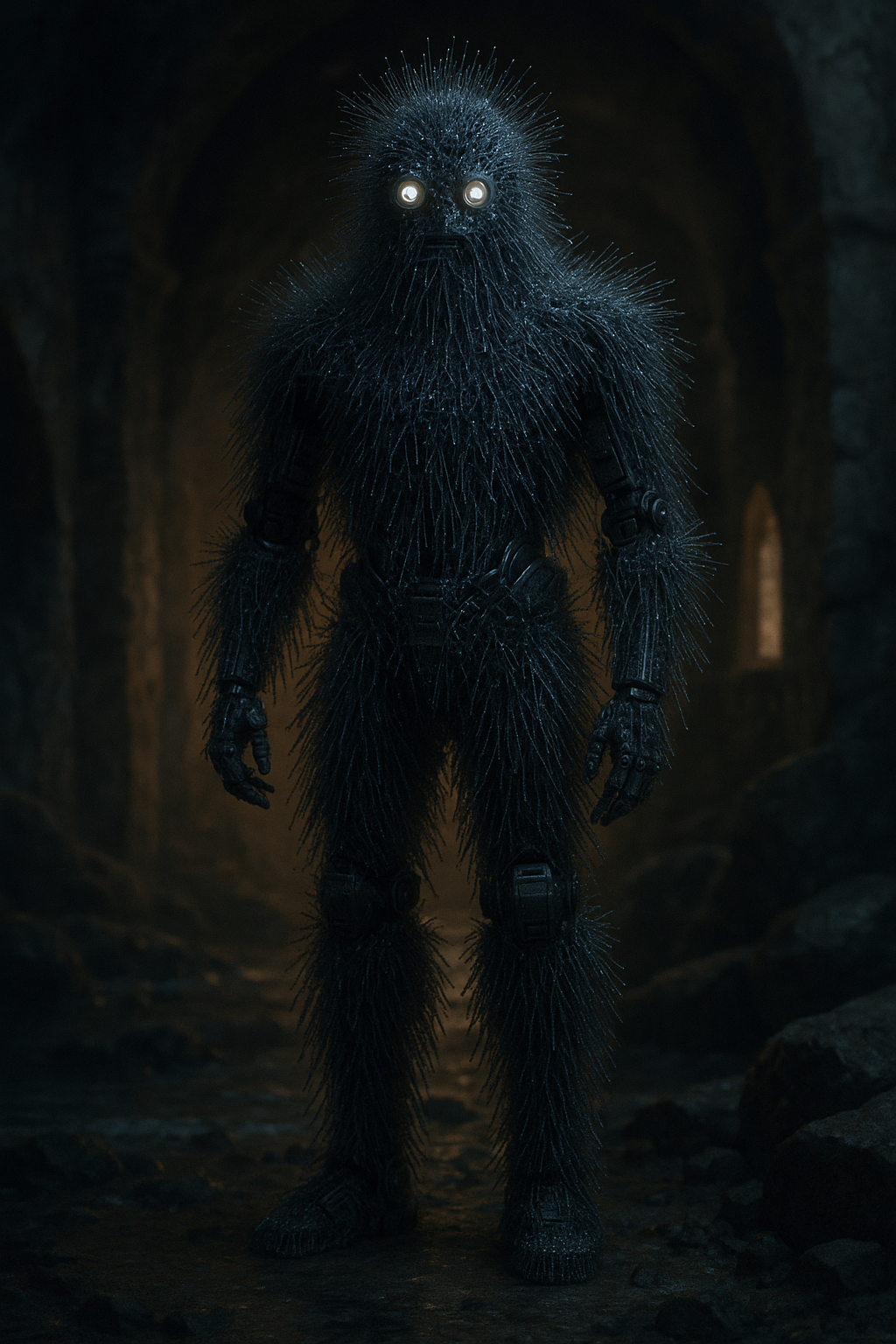
In the prophetic narration, Tamim al-Dari recounts how he and his companions were cast by the sea for a month until they reached a mysterious island.
There, they encountered a hairy creature named Al-Jassasah, who directed them to a great man in a monastery, bound with chains from his neck to his feet.
He asked them about certain temporal signs: the date palms of Baysan, the Lake of Tiberias, the spring of Zughar, and about the unlettered Prophet — had he appeared? had he triumphed?
When they answered yes, the man said, “I am the Dajjal, and soon I will be permitted to emerge.”
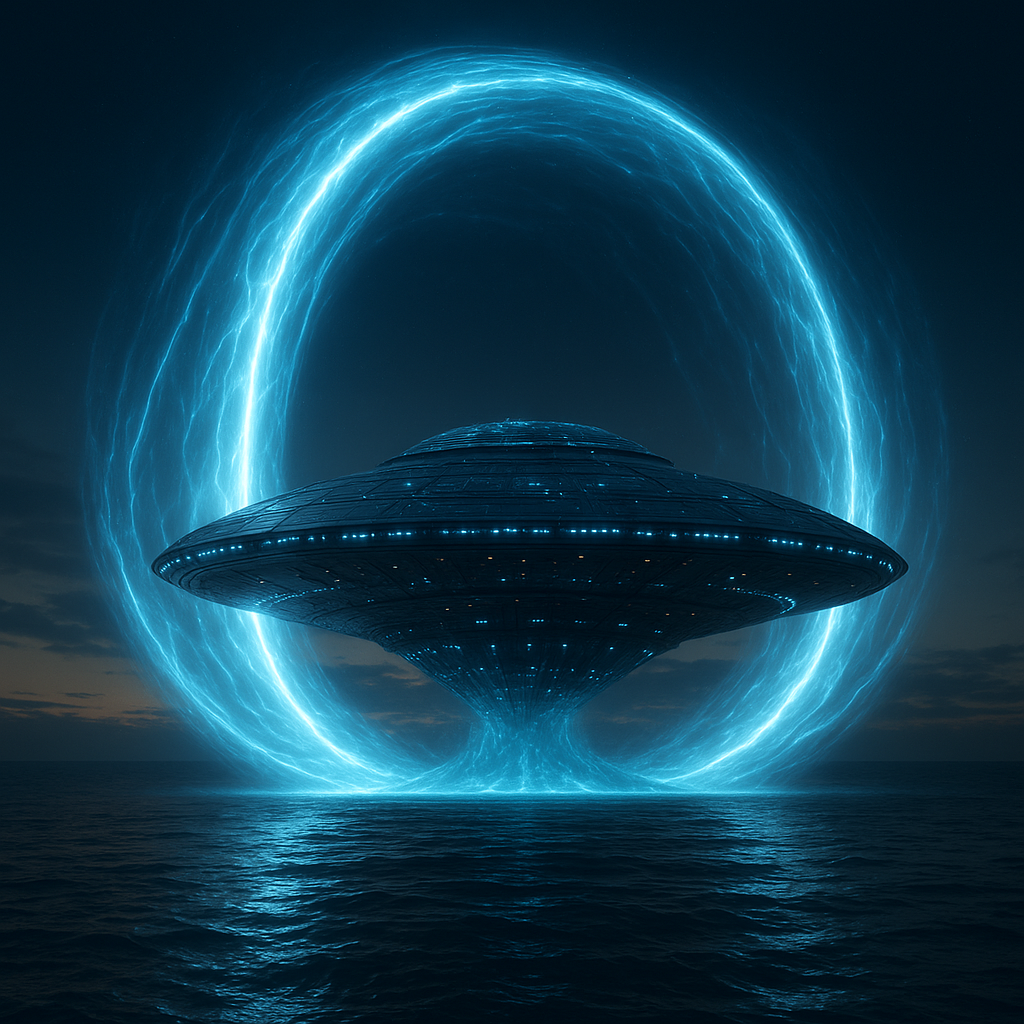
This scene can be understood symbolically and spiritually.
The island might not be an ordinary landmass; it could be a floating platform or an advanced vessel beyond the comprehension of those who saw it — something akin to a modern carrier or a technological base.
The chains of iron that surrounded him may not be literal at all; they might represent a highly advanced suit or technological armor, embedded with sensors, circuits, and intelligent systems that both sustain and restrain him — keeping him alive yet unable to move freely.
Perhaps the “iron” that encases him is a self-contained, intelligent confinement system — a fusion of metal and artificial intelligence, designed to preserve him while preventing his full activation.
In this sense, his imprisonment is not only physical, but also technological and temporal — a suspension in both matter and time, awaiting divine permission to break free.
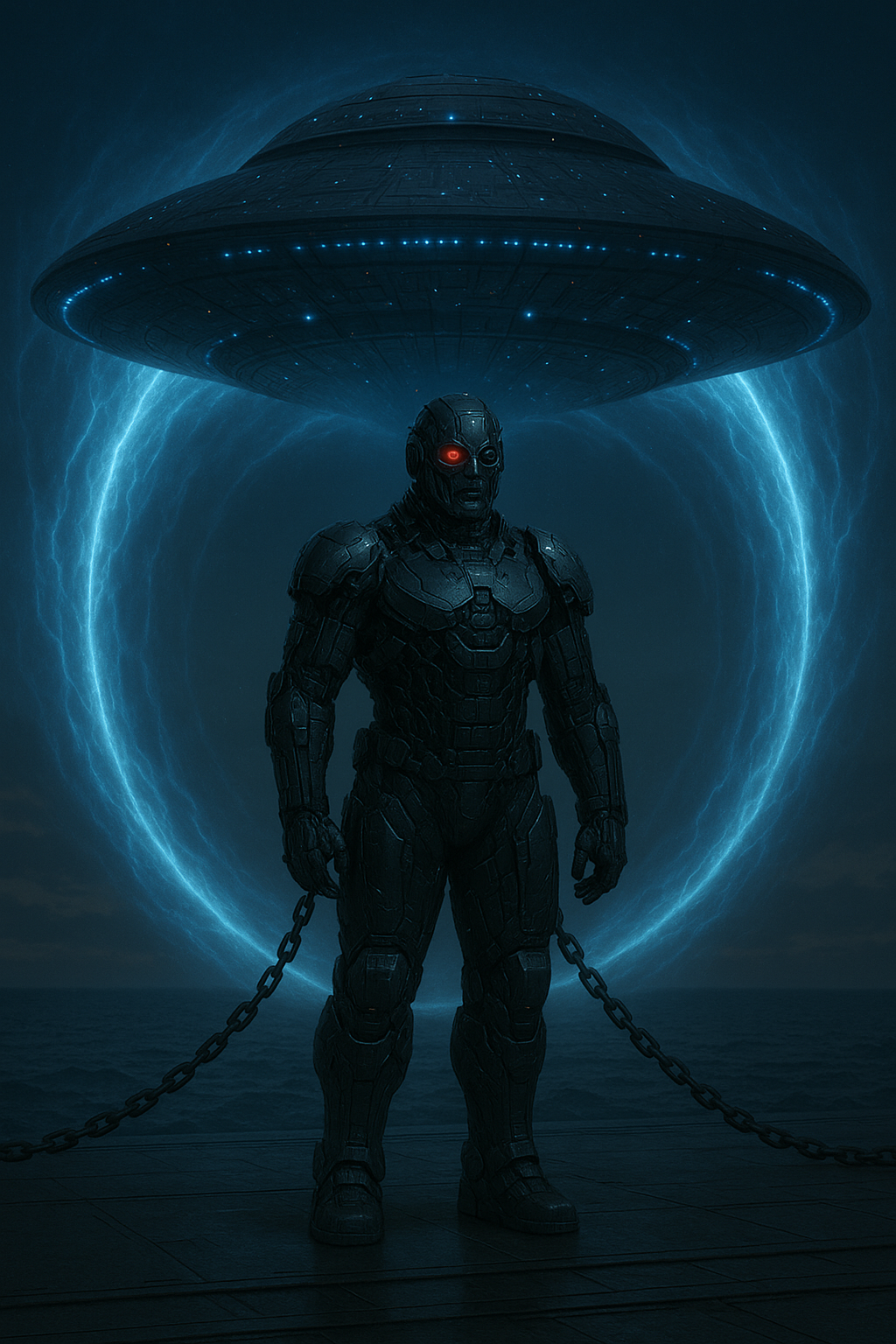
The chains may symbolize physical or digital laws — neural or electronic networks connecting consciousness and machine.
One human eye, the other mechanical — half flesh, half metal — a cybernetic being, merging human will with technological might.
Thus, the Dajjal becomes a being who has transcended ordinary temporal boundaries — aware of both past and future, yet unable to act except by God’s permission.
His bonds are the embodiment of Divine Law — a safeguard against corruption of the cosmic order.
When he kills a young man and brings him back to life, it is not an absolute mastery over death, but a temporary opening of a gate in time — one that soon closes to preserve the integrity of existence.
His abilities are limited, measured, and temporary.
His “presence everywhere” may symbolize mastery over the electron, the carrier of energy and information in our modern world — extending his presence to every screen and device.
His “presence in time” may correspond to the graviton, the theoretical particle governing spacetime curvature.
Thus, the Dajjal symbolizes one who masters both the carriers of space and time — the electron and the graviton — commanding both motion and moment.
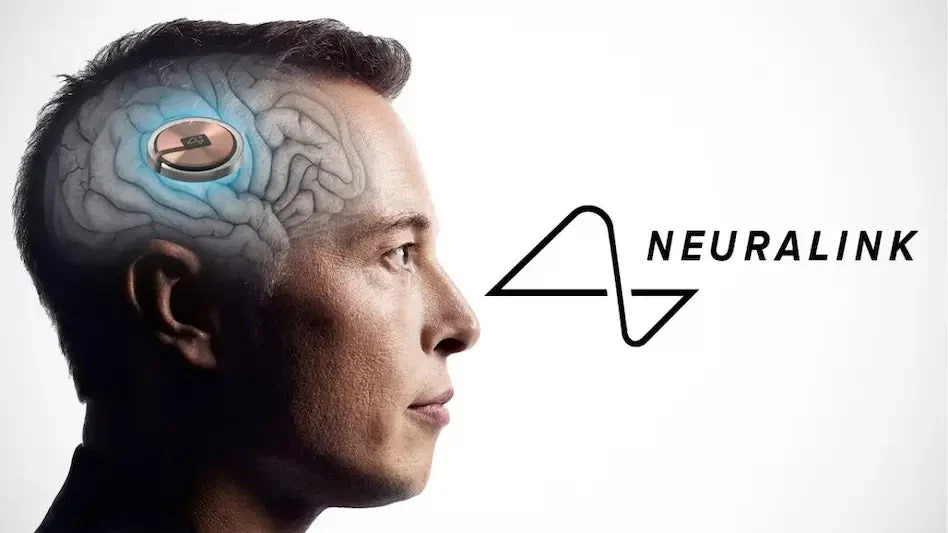
With modern innovations such as Neuralink, humanity itself is now approaching this dangerous threshold.
The line between the brain and the machine is dissolving, and a new hybrid being emerges — half living, half digital — one that hears, thinks, and computes simultaneously.
The Dajjal, therefore, stands as a warning: that merging consciousness with technology, if not governed by faith and morality, will not elevate humanity but enslave it under the illusion of control.
In theological contemplation, the Grandfather Paradox becomes a Divine Paradox — a hidden safeguard set by the Creator.
Whenever a being attempts to alter a moment that would erase its own existence, the act collapses, and order is restored.
The imprisonment of the Dajjal is a living manifestation of this truth: he exists, yet is bound by a law that prevents him from crossing his limits.
He can appear, speak, and act within boundaries — but must vanish until God grants him permission once more.
The island itself may thus be seen as a vessel of time, sailing not through seas but through eras — appearing and disappearing as temporal coordinates shift, existing at the crossroads of moments rather than on lines of latitude and longitude.
In this convergence of science and revelation, the image becomes complete:
Science depicts a universe where time can expand and contract,
and revelation describes a being who touched its borders yet remained bound by divine command.
Both affirm a higher law that sustains balance and prevents collapse.
His “presence everywhere” is a symbol of the electron.
His “presence in time” is a symbol of the graviton.
And between power and restraint stands the eternal law:
Nothing is granted except by measure,
and no veil of time is lifted except by the permission of God.
Thus the picture completes itself:
A traveler bound by law,
An island sailing the sea of time,
A man whose miracle reveals his limitation —
Existing within time and beyond it,
Until the appointed hour comes when he is allowed to reappear.
And here we may say:
There has already been one who traveled through time.
In the story of the Dajjal, we see a true time traveler —
A being suspended between centuries,
Bound by divine law,
Awaiting the destined moment to return to the stream of history,
To appear at the end of time as a test for creation and a trial for faith.
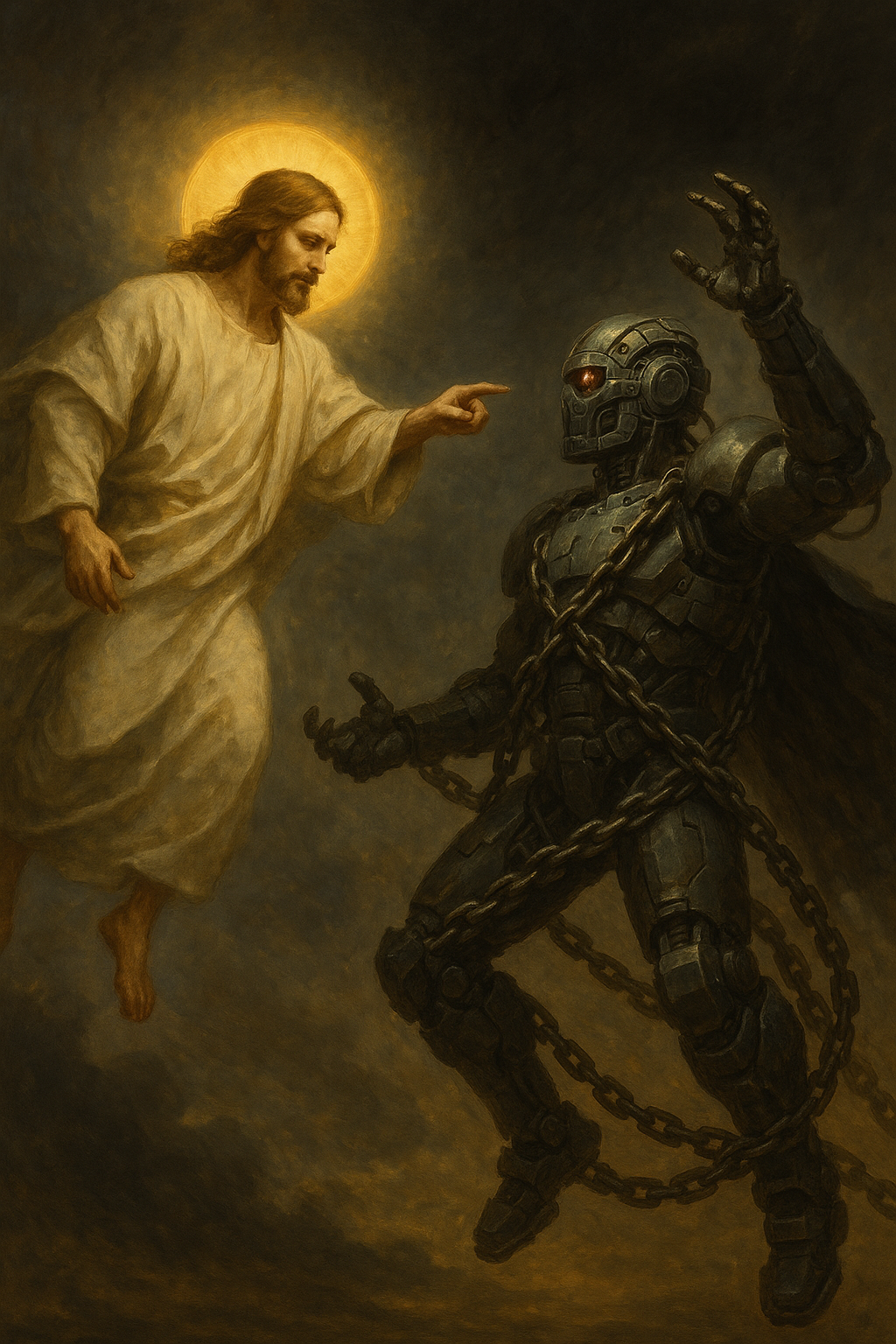
His deception will persist until God decrees its end.
No human, no science, no earthly power can overcome him.
Then God will send Jesus, the son of Mary (peace be upon him) —
the Prophet who was raised to the heavens,
the divine traveler through time,
who has not yet died but awaits the command of God to return.
He will confront the Dajjal,
End his rule,
Restore the balance of time,
And prove that immortality and control over destiny belong to God alone.
Between the Dajjal and Jesus, the symbolism of time travel converges:
The first defied the law of creation — so God restrained him.
The second obeyed the law of God — so God elevated him.
And thus, the circle of history will close —
beginning with rebellion against time,
and ending with obedience that returns time to its true Master,
the Lord of all worlds (The Giver of Causes).
Consciousness and the Eternal Fabric of Time
But what if consciousness itself is not an accident of biology —
not a spark that dies when the body decays —
but a dimension woven into spacetime?
If every thought, emotion, and act leaves an imprint on the cosmic field,
then perhaps death is not disappearance, but displacement —
a migration of awareness from the flow of time into its eternal record.
Just as gravity bends space and light stretches through the stars,
the soul might be a wave that ripples endlessly through the continuum of being.
In this vision, to “return in time” would not mean rebuilding matter,
but restoring a frequency of consciousness that already exists.
Every human moment — every heartbeat, every prayer —
remains preserved in the divine geometry of spacetime.
And when God wills, that moment may live again,
its consciousness awakened exactly where it once stood.
Modern physics hints at this mystery.
Quantum entanglement shows that two particles, once connected,
remain linked across any distance —
as if space and time themselves remember their unity.
Could consciousness work the same way —
each soul eternally entangled with the moment of its creation,
forever reachable through Divine Will?
If so, then resurrection is not an anomaly of nature,
but the ultimate synchronization —
the re-alignment of the soul’s coordinate with its timeless origin.
When the trumpet is blown and the dead rise,
it may not be a new creation from nothing,
but the re-activation of every stored moment of awareness
in the infinite archive of God’s memory.
And what of the future?
If the soul exists as part of spacetime’s continuum,
then perhaps beings of tomorrow — by God’s permission —
could perceive or even interact with echoes of the past,
not to alter destiny, but to preserve it.
The past would no longer be gone;
it would simply be asleep, waiting to be observed again.
In this way, consciousness becomes the true traveler through time.
The body is its vessel; the soul, its light.
And spacetime — that vast ocean of moments —
is but the mirror where God’s command reflects all that ever was and will be.
So perhaps what we call “life” is the act of God saying Be in motion,
and what we call “death” is simply the pause before the next command.
Between the pulse of existence and the silence of eternity,
the soul remains —
not lost, but eternally present in the memory of creation.
For time may bend,
matter may fade,
but consciousness — breathed by the Creator —
never leaves the field in which it was first spoken.
And thus, the secret of time is not only in the stars,
but within us —
for the soul itself is the bridge
between the fleeting and the forever.
Travel Through Time — Body and Consciousness
If the Dajjal is a being suspended between the boundaries of matter and time,
then his journey through time is not merely physical — it is dual:
a fusion of body and consciousness, bound together under divine law.
He can move, speak, and perform actions within the physical realm —
for his body, like ours, is part of the created world.
But when it comes to traveling through time —
beyond the flow of seconds and hours,
beyond the boundaries of life and death —
such a passage is only possible by the command of Allah.
Just as God allowed the Voyagers to reach the edge of the Solar System,
and the Parker Solar Probe to touch the outer breath of the Sun,
He may one day allow this singular traveler to pierce the veil of time itself —
but only once,
just as resurrection will be allowed once.
For it is not merely a journey of matter —
it is the awakening of consciousness woven into the very fabric of spacetime.
The Dajjal’s movement through eras, then, would not be an act of rebellion,
but a permitted anomaly,
a temporary crack opened by the will of the Preserver — Al-Hafeez.
For while the Dajjal may walk between the moments of creation,
it is Allah who sustains those moments,
who upholds every paradox,
and who alone allows the timeline to remain unbroken.
In this light, even the paradoxes of time —
the cause preceding the effect, or the future touching the past —
are not errors in creation,
but tests of consciousness.
They remind us that divine order is not limited by human perception.
When the Dajjal “travels,” he does so only within a boundary drawn by God —
for every step through time is measured by Qadr (Divine Decree).
And perhaps, at times, we experience faint echoes of this mystery.
When we enter a place we’ve never seen before yet feel we have,
when a scene unfolds before us and the mind whispers, “I’ve lived this already” —
we call it déjà vu,
but perhaps it is something deeper:
a momentary resonance of consciousness across the layers of spacetime.
A flicker of awareness between what was, what is, and what will be —
a shadow of how time travel might feel to the soul.
Thus, the Dajjal’s power is not ultimate; it is granted.
His journey is not defiance; it is permission.
And the paradoxes that arise from his passage —
the bending of time, the illusion of omnipresence, the echo of memory —
will not be resolved by him,
but by Allah,
the One who preserves all consciousness,
the Guardian of every timeline,
and the only Being who holds every “when” and every “where” in His Hand.
For He is The Preserver of Awareness,
The Keeper of Time,
and when the final traveler moves across the ages,
it will be because God Himself has opened the gate once more —
just as He will open it at the Resurrection,
when all consciousness, past and future, will awaken as one.

