RoofMan Official Blog
"If we teach today as we taught yesterday, we rob our children of tomorrow."

Archives

The author discusses the evolution of an AI brain system known as the .mind file system, which initially aimed to have AI organize its own knowledge and memory. However, the author’s attempts revealed that AI struggles with maintaining consistency and reliability in repetitive tasks. By shifting the focus from AI-driven organization to using simple, deterministic scripts for management, the system achieved better outcomes. These scripts handled structural maintenance while AI evolved to become a pattern detection tool. This new collaborative approach led to a more stable and consistent knowledge management system, demonstrating that intelligence arises from structured repetition and reflection.

Software development is a complex interplay between various elements, where senior developers succeed by retaining context. Modern AI, while pattern-recognizing, lacks continuity without memory. Instead of complex systems like vector databases, a straightforward Memory File System with structured Markdown files can better serve software development, allowing AI to remember key details such as codebases, architectural decisions, and documentation. Integrating AI with tools like GitHub and Jira enhances its relevance. By systematically reading, working, and updating memory, the AI can evolve into a knowledgeable collaborator over time, becoming an invaluable team member that never forgets and understands the project deeply.
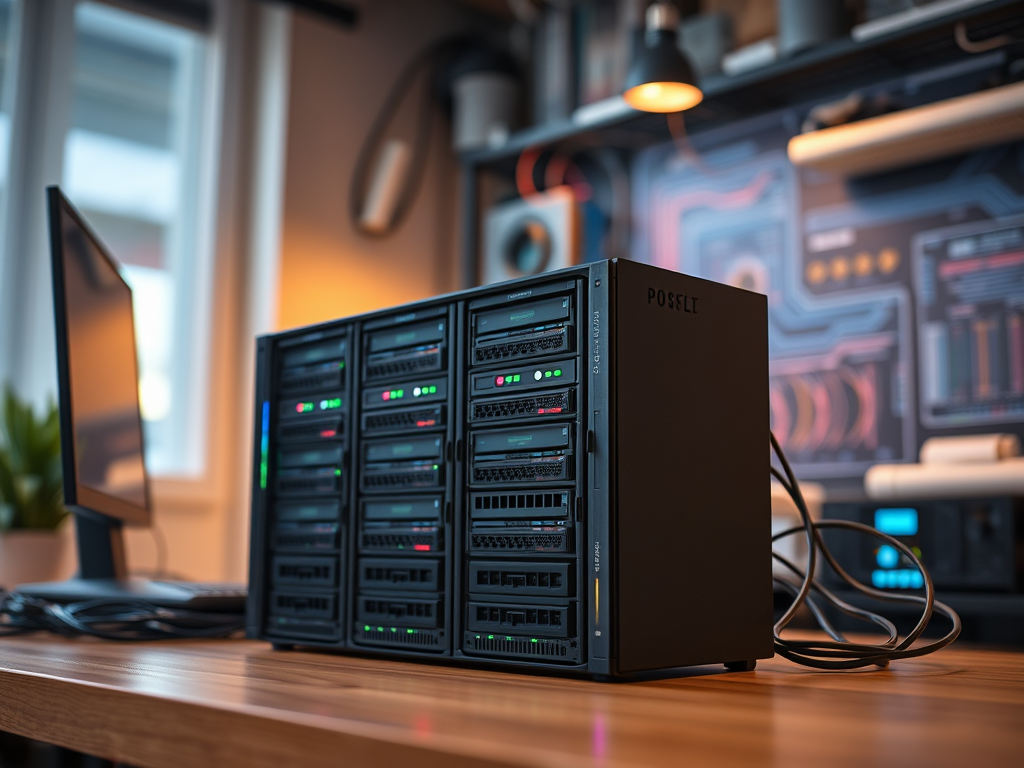
Micro data centers are compact, efficient infrastructures that consume 1–2 megawatts annually, providing autonomy and resilience outside of commercial cloud dependencies. They serve specialized use cases, making them ideal for home labs and research environments. The primary challenge in these settings is reliable connectivity, often relying on residential DSL and wireless connections, which can be fragmented. To address this, the TEDataConnector application was created, automating ISP account management and streamlining connectivity processes. By using aggregated residential lines, users can achieve significant cost savings and enhance scalability, fostering an environment for experimentation in networking and cybersecurity while promoting independence from larger cloud providers.

The article discusses challenges with VPN tunneling and multi-WAN aggregation, particularly the TCP-over-TCP meltdown, where throughput drops due to overlapping congestion control mechanisms. Switching to UDP-based outer tunnels resolved performance issues, improving bandwidth utilization across multiple WAN links while maintaining VPN reliability. It advises employing UDP for better aggregation outcomes.

Have you ever imagined building your own private cloud from scratch? That’s exactly what I set out to do. So, I rolled up my sleeves, turned my home into a mini data center, and embarked on a mission to create a private, micro-scale cloud that combines computing and storage power. Why? Because it’s not just about the cool factor—it’s about scaling operations, mastering IT and cybersecurity, and, of course, keeping my data… Read More

Introduction When I embarked on my personal lab project five years ago, my goal was clear: to make significant progress in understanding and managing my IT infrastructure. Over the years, I’ve made commendable strides, accumulating a wealth of resources both on-premises and in the cloud. My journey has been one of constant learning and adaptation, with a particular focus on securing my setup. I’m proud to say that, through diligent effort, I’ve… Read More

Advertisements
 RoofMan Official Blog