
Rethinking Connectivity for a Micro Data Center
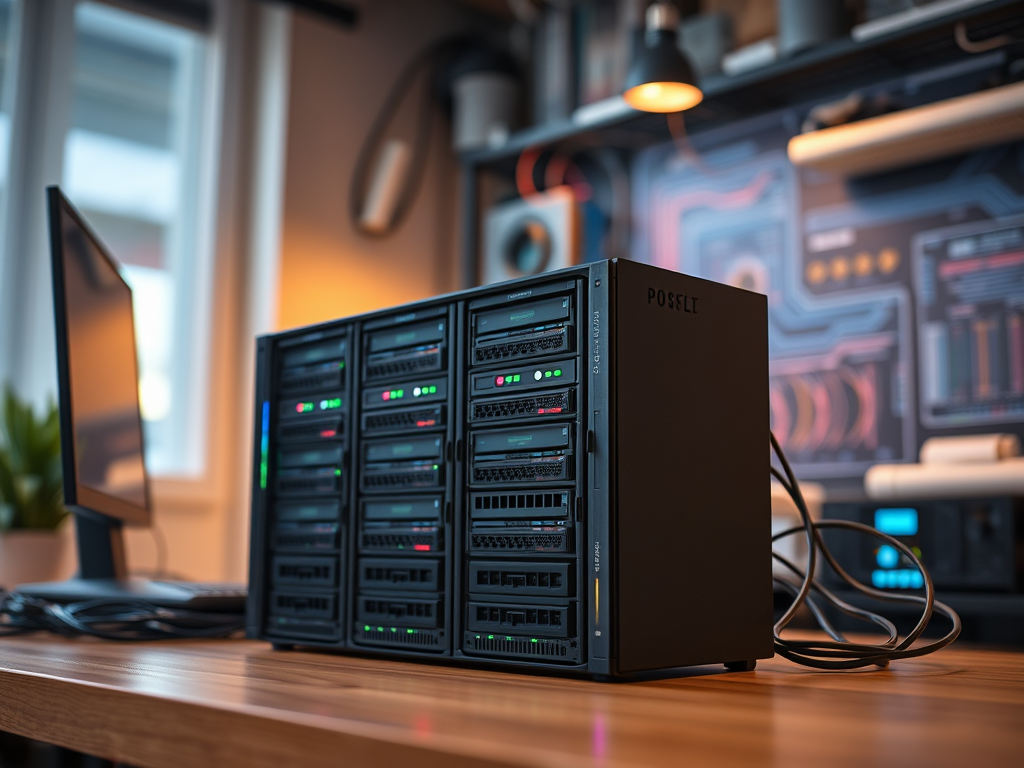
When most people picture data centers, they imagine vast warehouses filled with racks of servers, industrial cooling systems, and power consumption measured in hundreds of megawatts. Yet there is another category: the Micro Data Center. Defined broadly as an infrastructure that consumes no more than 1–2 megawatts annually, micro data centers are compact, efficient, and tailored for specialized use cases.
For me, a micro data center represents freedom and learning. It’s a research platform, a way to manage aspects of my digital life outside the commercial cloud, and a personal laboratory for exploring cybersecurity. Running such an environment means solving the same kinds of challenges that hyperscale providers face—chief among them, reliable connectivity.
Commercial providers enjoy redundant fiber paths and uplinks measured in tens of gigabits per second. A home lab, by contrast, must rely on residential DSL and wireless connections, stitched together with creativity and careful engineering. That’s where my journey began.
What Is a Micro Data Center?
A micro data center is essentially a scaled-down version of an enterprise facility. Its footprint and energy usage are smaller, but its purpose is the same: to deliver computing and storage capacity reliably. While hyperscale clouds burn through vast amounts of energy, micro data centers are measured in the 1–2 MW per year range—a fraction of the scale, but powerful enough for meaningful workloads.
Micro data centers are appealing because not every workload needs hyperscale capacity, and not every organization—or individual—wants to depend entirely on someone else’s infrastructure. They’re found at the edge, in research labs, in branch offices, and in homes like mine.
Beyond practicality, they offer three key benefits:
- Autonomy: Control over where data lives and how it is processed.
- Resilience: Redundancy for critical services without full reliance on external providers.
- Learning: A hands-on environment for networking, virtualization, and cybersecurity.
For me, my micro data center is both a production system and a classroom without walls.
The Connectivity Problem in Home Labs
Every data center depends on connectivity. Without reliable internet, servers and storage are just idle hardware. Hyperscale operators solve this with fiber, peering agreements, and redundant global networks. At home, the options are far more limited:
- DSL/VDSL over copper — affordable but speed-limited.
- Wireless (4G/5G) — flexible, but subject to caps and coverage gaps.
- Satellite/fixed wireless — possible in some areas, but costly and often high-latency.
In practice, the problem wasn’t only bandwidth—it was fragmentation. Each line came with its own quota, account, and renewal process. Packages could expire at midnight, cutting connectivity even while the servers ran flawlessly. Outages didn’t stem from technical failure, but from human oversight.
Aggregation technology like MPTCP (MultiPath TCP) helped by combining lines into a single virtual pipe, but it didn’t address the real challenge: automating ISP account management. That gap is what led me to create TEDataConnector.
Why Leased Lines Weren’t the Answer
A leased line might seem like the obvious solution. Dedicated bandwidth, symmetrical speeds, and enterprise-grade SLAs are standard. But for a home lab, leased lines are:
- Too expensive: Monthly fees can exceed the total cost of running a micro data center.
- Too complex: They demand contracts, specialized gear, and long-term commitments.
- Unnecessary: My workloads didn’t require enterprise-grade guarantees.
Instead, I chose a pragmatic path: residential DSL and wireless lines. On their own, they weren’t enough. But with aggregation and automation, they became the foundation of a resilient connectivity strategy. To make it viable, I needed a tool to handle the messy reality of multiple accounts, packages, and renewals.
From Theory to Practice: Building TEDataConnector
The solution was TEDataConnector, a private command-line application dedicated to managing Telecom Egypt (TE Data) subscriptions. It wasn’t designed for sale or distribution; it relies on reverse-engineered internals tightly bound to my own setup. Its purpose was to prove a concept: residential lines, managed intelligently, can rival enterprise-grade reliability.
The outcome was a self-managing connectivity layer. Where once I relied on manual logins, the system now predicted expirations and renewed packages proactively.
How TEDataConnector Works
TEDataConnector translates ISP accounts into structured aggregates and workflows.
Core Model
- Subscriber: A single account and its linked services.
- PackageInstance: Tracks active packages, quotas, and expiry dates.
- ChangePlan: Holds upgrade and downgrade options.
- TrackingRecord: Stores billing and usage for reporting.
Jobs
- Discovery: Authenticates, retrieves, and syncs account details.
- Renewal: Extends packages automatically before they expire.
- Scaling: It monitors consumption across all lines and decides which accounts need package upgrades or adjustments.
Example
# Run a full discovery
dotnet run -- run --discovery
In seconds, accounts are authenticated, packages updated, and billing synced—tasks that once took hours are reduced to a single command.

The Power of a Command-Line Interface
The choice of a CLI was deliberate. It provides:
- Scriptability: Easy integration with cron, systemd, or orchestration pipelines.
- Lightweight Operation: Perfect for headless servers.
In Action
# Renew packages automatically
dotnet run -- run --renewal

# Add a new subscriber
dotnet run -- adduser --userid "user123" --name "John Doe"

# Query usage stats
dotnet run -- stats --user "user123"
A process that once required multiple logins and clicks is now reduced to a single, automatable command.
Real Benefits in Practice
Once integrated, TEDataConnector delivered concrete benefits:
- Resilience: Multiple DSL and wireless lines, aggregated by MPTCP, created redundancy without leased lines.
- Continuity: Automated renewals eliminated downtime caused by expired packages.
- Scalability: Adding new subscribers became as simple as one CLI command.
- Cost Efficiency: Residential lines replaced costly corporate connectivity.
Beyond Internet: Landlines and Wireless ISPs
DSL is often tied to the status of the underlying landline account. If the voice line isn’t charged, the internet link is suspended—no matter how well the packages are managed. That makes landline automation the next logical step: model subscribers, track balances, and recharge accounts before disruptions occur.
The vision extends further: integrating wireless ISPs such as Vodafone 4G/5G as backup lines. Together, DSL, landline, and wireless connections would form a multi-ISP, self-healing connectivity fabric, shifting traffic dynamically to avoid outages.
Closing Thoughts
Cloud platforms feel infinite, but they come with dependency. For me, the micro data center is about autonomy: building infrastructure that is resilient, scalable, and secure—on my own terms.
TEDataConnector became a keystone in that effort. By automating ISP management, it turned fragile residential lines into a dependable backbone. With DSL, landlines, and wireless links all under automation, my home lab achieved the resilience of a much larger system.
This isn’t about selling a tool or sharing sensitive details—it’s about sharing an idea: that with the right mindset, micro-scale infrastructure can deliver big results. For me, the journey has been more than technical—it’s been deeply rewarding, both as a research platform and as a classroom for cybersecurity.
The cloud will always have its place. But autonomy matters—and at the micro scale, it’s within reach.
Important Note
The source code for these projects is hosted on-premises—not on GitHub or any other public repository. This is intentional: to protect the integrity of local ISPs and because, above all, I am an Egyptian who loves his country.
That doesn’t mean I’m not naughty—I’ll always be a tinkerer at heart. 😅
TEDataConnector is just one part of a broader series of initiatives under a grand project I call Messiah—focused on automation layer for resilient micro-infrastructure.


 RoofMan Official Blog
Pingback: GhostMachine: My Private Network in a Public World | RoofMan Official Blog